|
|
Home :: Books, Calendars, Cards & Games
:: New Zealand Gift Cards
New Zealand Gift Cards
View our range of New Zealand made New Zealand Gift Cards products.
All the cards come with a matching envelope.
| New Zealand Gift Cards - Product list |
|
Result pages: [1] [2]
See details
|
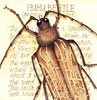
Huhu Beetle Gift Card
|
The huhu beetle is a longhorn, averaging 40mm in length. Nocturnal, it flies noisily. The eggs are laid under bark, where they hatch about three weeks later.( Prionoplus reticularis )
|
Price: $4.50 NZD [convert]
(Notify me when the price drops)
BUY NOW>>
|
|
See details
|
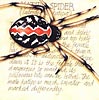
Katipo Spider Gift Card
|
The katipo ( Latrodectus katipo ) is found on coastal dunes and under driftwood and debris in the North Island and the top half of the South Island. The female has an abdomen smaller than a pea, with a distinctive red stripe down it.
|
Price: $4.50 NZD [convert]
(Notify me when the price drops)
BUY NOW>>
|
|
See details
|
Praying Mantis Gift Card
|
Occurring in New Zealand and Australia the praying mantis ( Orthodera ministralis ) is known to Maori as whe or ro. It is sometimes thought to be called the "preying mantis" for its ferocious attacks on insects it stalks.
|
Price: $4.50 NZD [convert]
(Notify me when the price drops)
BUY NOW>>
|
|
See details
|
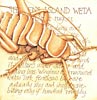
Stephens Island Weta Gift Card
|
Occurring on Stephens and other off-shore islands, the Stephen Island weta ( Deinacrida rugosa ) is large, with a body length of 63mm/ 2.5 inches.
Heavy armour gives it robustness and safety to live on the ground. It shelters under stones and rotting logs
|
Price: $4.50 NZD [convert]
(Notify me when the price drops)
BUY NOW>>
|
|
See details
|
Fantail Gift Card
|
| Collage Card Known to Maori as Piwakawaka fantails are attractive and seemingly friendly native birds as they dart about near human activity in pursuit of disturbed insects. Maori regard them as being an omen of death.
|
Price: $3.68 NZD [convert]
(Notify me when the price drops)
BUY NOW>>
|
|
See details
|
Kauri Snail Gift Card
|
| Collage Card A great big carnivorous land snail, Paryphanta busbyi or Pupu Rangi, this one is about 50 mm across. They are known to eat worms and other small invertebrates and are often associated with kauri trees..
|
Price: $3.68 NZD [convert]
(Notify me when the price drops)
BUY NOW>>
|
|
See details
|
Kina Gift Card
|
| Collage Card Kina is the Maori name for what are commonly known as sea-urchin. They populate the shallower waters of the New Zealand coast lune and have been an important food source for Maori.
|
Price: $3.68 NZD [convert]
(Notify me when the price drops)
BUY NOW>>
|
|
See details
|
Kiwi Gift Card
|
| Collage Card New Zealand's national symbol, the kiwi is unique to Aotearoa.
According to Maori legend, Tane Mahuta, guardian of the forest, gave kiwi the task of keeping the forest floor clean. Kiwi, as one of the earliest conservationists, continues to fulfil this task today.
|
Price: $3.68 NZD [convert]
(Notify me when the price drops)
BUY NOW>>
|
|
Result pages: [1] [2]
|
|
|
|
|